Tour in Sichuan
Introduction of Sichuan
Sichuan (
Chinese: 四川 ), is a province in the west of the Southern Central Region of China. Sichuan was the cradle of unique local civilizations, which can be dated back to at least the fifteenth century BC (coinciding with the later years of Shang Dynasty). Beginning from the ninth century BC, Shu (today Chengdu ) and Ba (today Chongqing City ) emerged as cultural and administrative centers where two rival kingdoms were established.
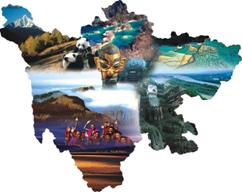
Sichuan has 5 UNESCO World Heritage Sites, including Huanglong Scenic and Historic Interest Area, Jiuzhai Valley Scenic and Historic Interest Area, Mt. E'Mei Scenic Area as well as Leshan Giant Buddha Scenic Area, Mt. Qincheng and the Dujiang Yan Irrigation System, and Sichuan Giant Panda Sanctuaries . Colorful natural scenes, memorable historic remains and ethnic manners in Sichuan attract much attention from the native and foreign tourists.
Also, the Sichuanese are very proud of their cuisine, known as one of the Four Great Traditions of Chinese cuisine, which now is famous all over the world. Sichuan cuisine is of "one dish, one shape, hundreds of dishes, hundreds of tastes", as the saying goes, to describe its acclaimed diversity. The most prominent traits of Sichuanese cuisine are described by four words: spicy, hot, fresh and fragrant.
Jiuzhai Valley
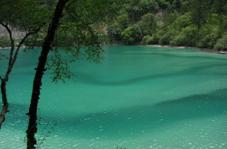
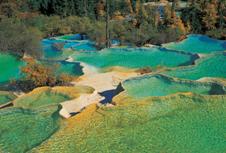
Jiuzhai Valley ( Chinese: 九寨沟 ), known in English as the "Valley of Nine Villages", lies at the southern end of the Minshan mountain range, 330 km north of the provincial capital of Chengdu. It is known for its many multi-level waterfalls and colorful lakes, and was declared a UNESCO World Heritage Site in 1992.
The valley covers 720 km 2 , with buffer zones covering an additional 600 km 2 . Its elevation, depending on the area considered, ranges from 1,998 to 2,140 m (at the mouth of Shuzheng Gully) to 4,558 - 4,764 m (on Mount Ganzigonggai at the top of Zechawa Gully). Jiuzhai valley is composed of three valleys arranged in a Y shape. The Rize and Zechawa valleys flow from the south and meet at the centre of the site where they form the Shuzheng valley, flowing north to the mouth of the valley. The mountainous watersheds of these gullies are lined with 55 km of roads for shuttle buses, as well as boardwalks and small pavilions. The boardwalks are typically located on the opposite side of the lakes from the road, shielding them from disturbance by passing buses.
Most visitors will first take the shuttle bus to the end of Rize and/or Shuzheng gully, then make their way back downhill by foot on the boardwalks, taking the bus instead when the next site is too distant.
|
| Panda Lake |
|
Colorful Jiuzhai |
Mount E’Mei
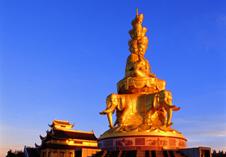
Mt. E'Mei ( Chinese: 峨嵋山 ) is a mountain in Sichuan province of Western China . At 3,099 m ( 10,167 ft ), Mt. E'Mei is the highest of the Four Sacred Buddhist Mountains of China . The patron bodhisattva of E'Mei is Samantabhadra , known in Chinese as Puxian ( Chinese: 普贤菩萨 ). 16th and 17th century sources allude to the practice of martial arts in the monasteries of Mt. E'Mei made the earliest extant reference to the Shaolin Monastery as Chinese boxing's place of origin.
Mt. E'Mei was made a
UNESCO World Heritage Site in 1996. Great spectacles of Mt. E'Mei include the
Sunrise and
Clouds Sea seen from the
Golden Summit of the mountain. The sunrise is very varied, but optimally begins with the ground and sky being in the same dark purple, soon showing rosy clouds, followed by a bright purple arc and then a semicircle where the sun is coming up. The Clouds Sea includes several cloud phenomena, e.g. clouds appearing in the sky above, in addition to the regular clouds beneath.
|
|
Samantabhadra |
|
Sunrise & the Clouds Sea |
Dujiang Yan Irrigation System
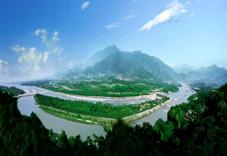
Dujiang Yan ( Chinese: 都江堰 ) is an irrigation infra-structure built in 256 BC during the Warring States Period of China by the Kingdom of Qin. It is located in the Min River ( 岷江 ) in Sichuan Province, near the capital Chengdu. It is still in use today and still irrigates over 5,300 square kilometers of land in the region.
Today, Dujiang Yan has become a major tourist attraction. It is also the admiration of scientists around the world, because it has one ingenious feature. Unlike contemporary dams where the water is blocked with a huge wall, Dujiang Yan still lets water go through naturally. Modern dams do not let fish go through very well, since each dam is a wall and the water levels are different. In 2000, Dujiang Yan became a
UNESCO World Heritage Site .
|
|
Panorama |
|
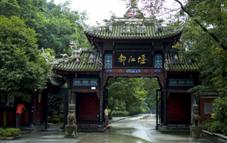
Entrance of Dujiang Yan |
Chengdu Research Base of Giant Panda Breeding
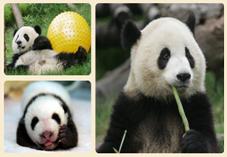
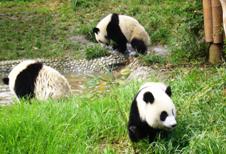
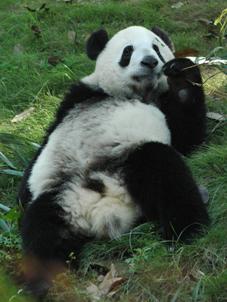
Chengdu Research Base of Giant Panda Breeding ( Chinese: 成都大熊猫繁育研究基地 ), or simply Panda Base, is a non-profit research and breeding facility for giant pandas and other rare animals. Chengdu Panda Base was founded in 1987. It started with 6 giant pandas that were rescued from the wild. By 2007, it has had 110 panda births, and the captive panda population has grown to 62.
The stated goal of the Panda Base is to "be a world-class research facility, conservation education center, and international educational tourism destination." As a famous sightseeing destination and a window to the wild, we improved our service facilities for tourists. Our efforts have made the Panda Base attractive to foreign and domestic audiences. We will fully use the resource of our endangered animals to strengthen conservation education to the public, and develop the Panda Base to be a unique educational tourism destination.
|
|
|
|
| |
|
Shanghai Expo 2010
Introduction of Shanghai
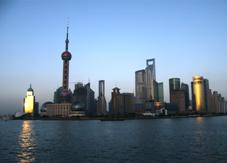
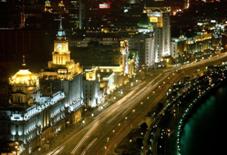
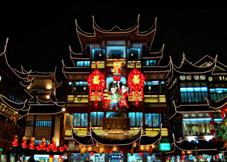
Shanghai ( Chinese: 上海 ) is the largest city in China, and one of the largest metropolitan areas in the world. Located on China 's central eastern coast at the mouth of the Yangtze River, the city is administered as a municipality of the People's Republic of China with province-level status. Thanks to its favourable port location and as one of the cities opened to foreign trade, the city flourished as a center of commerce between east and west, and became a multinational hub of finance and business since the 1930s. Economic reforms in 1990 resulted in intense development and financing in Shanghai , and in 2005 Shanghai became the world's largest cargo port. The city is a tourist destination renowned for its historical landmarks such as the Bund and City God Temple , its modern and ever-expanding Pudong skyline including the Oriental Pearl Tower , and its new reputation as a cosmopolitan center of culture and design.
Today, Shanghai is the largest center of commerce and finance in mainland China , and has been described as the "showpiece" of the world's fastest-growing major economy. More detailed information about Shanghai can be found in http:// www.shanghai.gov.cn .
|
|
|
|
The Bund |
 |
City God Temple |
Expo 2010 Shanghai
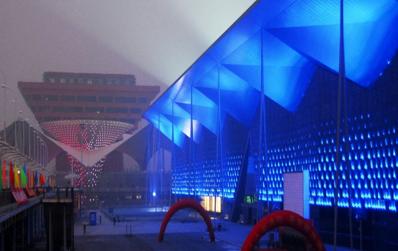
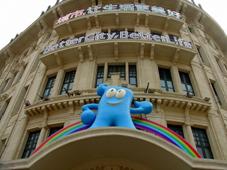
Expo 2010 ( Chinese: 2010 上海世界博览会 ) will be held in Shanghai , China from May 1 to Oct 31 , 2010 and is a scheduled World Expo in the grand tradition of international fairs and expositions. By dedicating a 5.28 square-kilo- meter area along both sides of the Huangpu River at the core of the city to exhibitions, events and forums, Shanghai hopes to build a powerful and lasting pilot example of sustainable and harmonious urban living. The theme of the exposition as " Better City , Better Life ", not only represents the common wish of the whole humankind for better living in future urban environments, also signifies Shanghai 's new status in the 21st century as a major economic and cultural center of China . It is expected to generate the largest number of visitors in the history of the world's fairs in terms of gross numbers.
Therefore, the participants can also visit Expo 2010 just before or after ISFRMT 2010, and take the occasion for China to bring the world at home, and for the world to feel at home in China.
More detailed information can be found in http:// en.expo2010.cn / .
|
Shanghai Expo 2010 Pavilion
|
|
| |